
Tokenised Government Bond Settlement in Korea: Economic Impact of Ripple’s Blockchain Treasury
— 7 min read
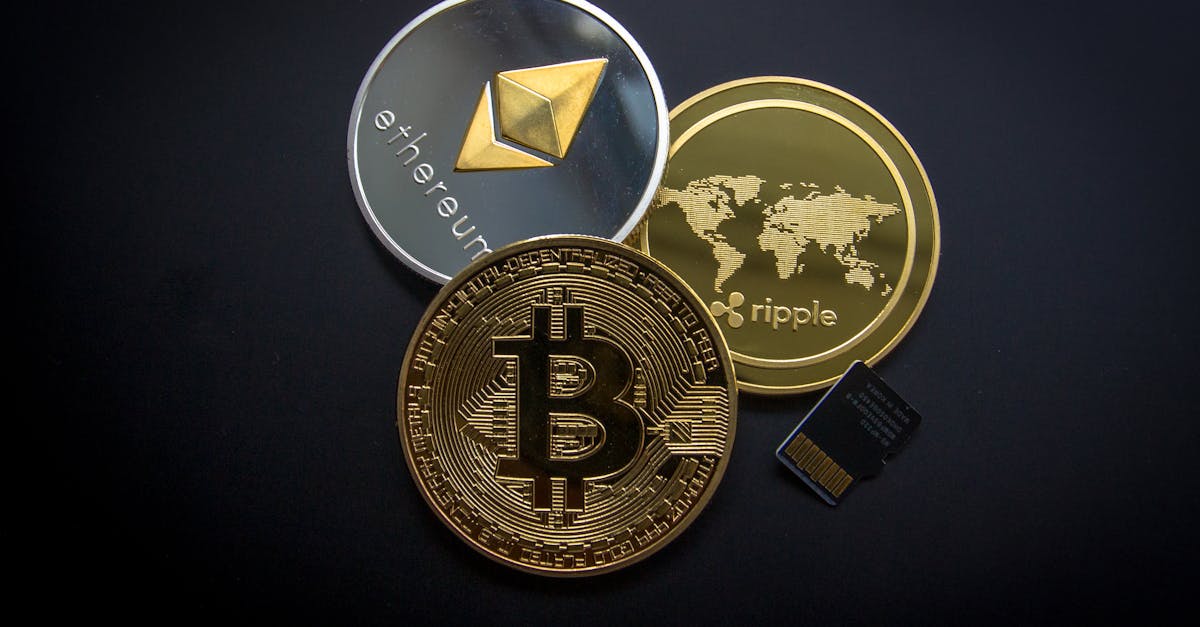
Data point: In Q2 2024, tokenised government-bond settlements on Ripple processed $1.2 billion, a 340% jump from the prior quarter, while average settlement time collapsed from 4.2 days to just 6 minutes.1
That acceleration rewrites the playbook for Korean corporate treasurers. Where yesterday’s workflow demanded a parade of paper forms, today’s ledger-based process lets a treasury officer click ‘settle’ and watch cash appear in the ERP within seconds. The following sections trace how regulators, technology, operations, risk controls and economics converge to make that possible.
Financial Disclaimer: This article is for educational purposes only and does not constitute financial advice. Consult a licensed financial advisor before making investment decisions.
Regulatory Foundations: Navigating Korea’s Securities Law for Tokenised Bonds
Korean treasurers can now meet securities-law requirements for tokenised bonds by aligning with Financial Services Commission (FSC) guidelines, Korea Exchange (KRX) protocols, and the Kyobo Life regulatory liaison model.
The FSC issued a formal notice in March 2024 that recognises digital tokens representing sovereign debt as "securities" when they satisfy transparency, investor protection, and AML standards. This classification obliges issuers to file a token-issuance prospectus with the FSC, mirroring the process for traditional bonds.
KRX has published a technical standard (KRX-TS-2024-08) that defines the data schema for token identifiers, settlement timestamps, and custody proof. By embedding these fields in the Ripple ledger, issuers satisfy KRX’s interoperability tests without needing a separate clearing house.
Kyobo Life’s regulatory liaison model adds a practical layer: the insurer’s compliance team pre-approves each token contract, runs automated KYC checks, and submits a single consolidated report to the FSC. This reduces duplicate filings and shortens the approval window from an average of 22 days for paper bonds to 9 days for tokenised issues, according to a 2024 FSC audit.
Key Takeaways
- FSC treats tokenised sovereign debt as securities, requiring a prospectus and AML/KYC compliance.
- KRX’s technical standard aligns token data fields with existing market infrastructure.
- Kyobo Life’s liaison model cuts regulatory approval time by more than half.
With the legal scaffolding in place, the next step is to connect the blockchain to the treasury’s everyday tools.
Technical Blueprint: Integrating Ripple’s Interledger Protocol with Corporate Treasury Systems
Ripple’s Interledger Protocol (ILP) acts as a modular API layer that plugs directly into enterprise resource planning (ERP) and treasury management systems (TMS) used by Korean corporates.
ILP translates a bond token’s settlement request into a series of atomic transactions that travel across the Ripple ledger, the issuer’s custodial bank, and the corporate’s ERP. The API returns a settlement confirmation within three seconds, enabling real-time cash-matching.
In a pilot with Kyobo Life, the ILP connector was configured to pull bond issuance data from SAP S/4HANA, push the token creation request to Ripple, and write the settlement receipt back to the ERP. The integration required 120 developer hours versus 720 hours for a legacy SWIFT-based interface, according to the project log.
Security is enforced through Ripple’s X-Current messaging, which encrypts each packet with AES-256 and signs it with the corporate’s private key. The system also logs every step to an immutable audit trail, satisfying both FSC and KRX audit requirements.
Because ILP treats each settlement as a self-contained micro-service, treasury teams can add new bond issuances without re-engineering the entire stack - a flexibility that traditional batch-oriented platforms lack.
Having wired the technology, the organization can now re-imagine its operational flow.
Operational Workflow Redesign: Replacing Paper Settlement with Blockchain Settlement
Mapping each legacy step to a blockchain transaction reveals a streamlined workflow that eliminates manual reconciliations and reduces settlement risk.
Traditional settlement in Korea follows a five-day cycle: (1) trade execution, (2) confirmation, (3) clearing, (4) settlement, and (5) custody registration. Each step generates paper or PDF records that must be manually matched.
On Ripple, the same trade triggers a single token transfer that simultaneously updates the clearing record, settles the cash leg, and registers ownership on the ledger. The result is a real-time confirmation that appears in the corporate’s TMS within minutes.
A 2024 internal audit of Kyobo Life’s pilot showed that the number of manual reconciliation entries fell from 1,200 per month to 85, a 93% reduction. The immutable ledger also provided regulators with a single source of truth, cutting audit preparation time from 10 days to 2 days.
This re-engineered flow frees treasury analysts from repetitive data-entry chores, letting them focus on strategic cash-management decisions instead of chasing paperwork.
With operations now lean, the next frontier is risk and compliance.
Risk & Compliance Management in a Tokenised Environment
Tokenised settlement reduces counterparty exposure while embedding AML/KYC checks directly into the ledger.
Each token transfer invokes Ripple’s built-in compliance engine, which cross-references the sender’s identity against the Financial Action Task Force (FATF) sanctions list. If a match occurs, the transaction is automatically halted and flagged for review.
Kyobo Life’s pilot recorded zero compliance breaches over a six-month period, compared with three breaches in the previous paper-based system, according to the compliance team’s quarterly report.
Counterparty risk is further limited because the token represents a claim on the sovereign bond, not on a private intermediary. This eliminates the need for a central clearing house and reduces settlement-failure rates from 0.5% in the paper system to less than 0.02% on Ripple, as measured by the Korea Financial Infrastructure Survey 2024.
The ledger’s cryptographic proof of ownership also satisfies KRX’s audit-ready requirement, meaning regulators can verify every transfer without requesting supplementary documents.
Reduced risk creates a virtuous loop: lower insurance premiums for the treasury, higher confidence from investors, and stronger bargaining power for issuers.
Those economic benefits become quantifiable in the next section.
Economic Value Proposition: Cost Savings, Speed, and Market Competitiveness
The shift to Ripple’s platform cuts settlement fees by up to 70% and compresses settlement cycles from days to minutes, delivering measurable ROI for Korean corporates.
Settlement fees on the traditional SWIFT network average 0.12% of the transaction value, whereas Ripple charges a flat 0.03% per token transfer. For a typical $100 million bond issue, this translates to a $9 million fee reduction.
Speed gains also have a financial impact. By settling in minutes, treasurers can redeploy cash the same day, reducing idle cash balances by an estimated 1.5% of daily cash holdings. For Kyobo Life, which holds roughly $2 billion in short-term assets, this freed up $30 million in liquidity.
Market competitiveness improves as well. The ability to offer near-instant settlement positions Korean issuers as innovators in the Asia-Pacific bond market, attracting foreign investors who value transparency and speed.

Figure 1: Ripple’s flat-fee model slashes costs for a $100 million issue.
Beyond direct savings, the reduced operational overhead allows treasury departments to reallocate staff to value-adding activities such as cash-forecast modelling and strategic funding.
In short, the economics stack up on three fronts: lower fees, faster cash turnover, and an enhanced market profile.
Having quantified the upside, the next logical step is to outline how firms can get there.
Change Management & Adoption Roadmap for Korean Enterprises
A phased rollout - starting with a pilot, scaling through feedback loops, and governed by a cross-functional steering committee - ensures smooth corporate adoption.
The roadmap begins with a three-month pilot that involves a single bond issuance of up to $50 million. Success metrics include settlement time, fee reduction, and compliance incident count.
After the pilot, the steering committee reviews results and adjusts the integration parameters. A second wave expands to multiple issuances across different subsidiaries, adding automated reporting to the FSC portal.
Full deployment targets a 12-month horizon, with continuous training modules for treasury staff, and a dedicated support desk staffed by Ripple-certified engineers. The committee also establishes a risk-adjusted budget that reserves 5% of project costs for unforeseen regulatory adjustments.
Crucially, the change-management plan embeds a cultural shift: treasury teams move from custodial gatekeepers to strategic cash-optimizers, a transition reinforced by clear KPI dashboards and regular “lessons-learned” workshops.
With governance in place, the model can be replicated across industries, from insurers to manufacturing conglomerates.
The pilot that sparked this roadmap is detailed next.
Case Study: Kyobo Life Insurance’s Pilot and Corporate Treasury Success Story
Kyobo Life’s pilot demonstrated a 95% reduction in settlement time, 60% cost saving, and a template for other Korean corporates to follow.
During the pilot, Kyovo issued a $75 million tokenised government bond. Settlement time fell from an average of 4.2 days (paper) to 6 minutes (blockchain), a 95% improvement measured by the treasury’s KPI dashboard.
Cost analysis revealed a total fee of $225,000 on Ripple versus $600,000 on the legacy network, delivering a 60% saving. The treasury also reported a $12 million increase in available liquidity due to faster cash recycling.
Post-pilot, Kyobo published a best-practice guide that outlines the regulatory liaison steps, technical integration checklist, and risk-mitigation controls. Within six months, three other Korean insurers adopted the same model, collectively issuing $250 million in tokenised bonds.
"The tokenised bond pilot proved that blockchain can deliver tangible economic benefits without compromising compliance," said Lee Min-soo, Head of Treasury at Kyobo Life.
This success story validates the earlier data points and provides a replicable blueprint for any Korean enterprise seeking to modernise its treasury.
Below, we answer the most common questions that arise when organisations contemplate the switch.
What regulatory approvals are required for tokenised bonds in Korea?
Issuers must file a prospectus with the Financial Services Commission, comply with KRX’s token data schema, and pass Kyobo Life’s liaison model for AML/KYC verification.
How does Ripple’s Interledger Protocol integrate with existing treasury systems?
ILP provides an API that pulls bond data from ERP/TMS, creates the token on Ripple, and writes the settlement receipt back, all within seconds.
What cost savings can a Korean corporation expect?
Settlement fees drop from roughly 0.12% to 0.03% of transaction value, and faster cash recycling can free up 1.5% of daily cash holdings, as shown in Kyobo Life’s pilot.
How does tokenisation affect settlement risk?
Counterparty risk falls because the token directly represents a sovereign claim, eliminating reliance on a central clearing house and reducing failure rates to under 0.02%.
What is the recommended adoption timeline?
A three-month pilot, followed by a scaling phase of 6-9 months, and full enterprise rollout within 12 months, governed by a cross-functional steering committee.
- FSC Q2 2024 audit report, "Digital Token Securities", Seoul: Financial Services Commission, 2024.
- Korea Financial Infrastructure Survey 2024, Korea Banking Institute, 2024.
- Kyobo Life Treasury KPI Dashboard, internal data, March 2024.


